The Great Rivers Biennial (GRB)—a collaborative initiative between CAM and the Gateway Foundation—recognizes and fosters artistic talent in the greater St. Louis metropolitan area. The artists selected receive $25,000 in unrestricted funding and are featured in the Great Rivers Biennial exhibition every two years at CAM. Since 2003, the GRB has recognized the standout creative voices of 36 local artists in our region.
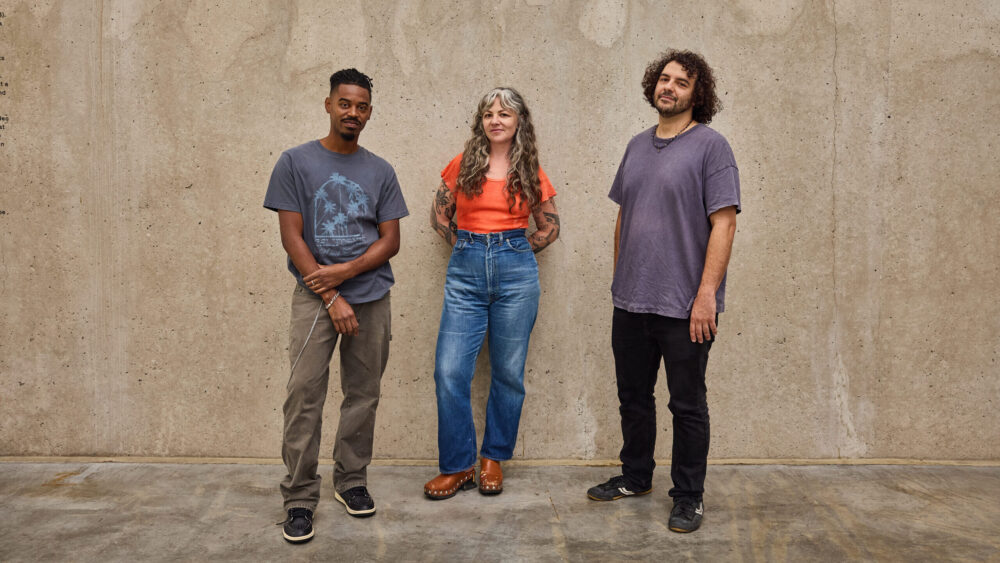
For the 2026 Biennial, artists Vaughn Terrell Davis Jr., Lauren dela Roche, and Vincent Stemmler have proposed ambitious exhibitions that explore figuration, gesture, materiality, and color through painting, drawing, sculpture, ceramics, video, and digital media. Their thoughtful considerations of repair and regeneration offer visions of resilience.
The three award winners were unanimously selected by a distinguished panel of independent jurors: Leslie Hewitt, artist and Associate Professor of Art at Rice University in Houston; Margot Norton, Chief Curator at the Berkeley Art Museum and Pacific Film Archive in Berkeley; and Pavel Pyś, Curator of Visual Arts and Collections Strategy at the Walker Art Center in Minneapolis. The jurors made the selection after visiting the studios of ten semifinalist artists who were chosen from a pool of 93 applicants.
Great Rivers Biennial 2026 is organized for the Contemporary Art Museum St. Louis by Dean Daderko, Ferring Foundation Chief Curator, and Misa Jeffereis, Associate Curator, with support from Grace Early, Exhibitions Assistant.
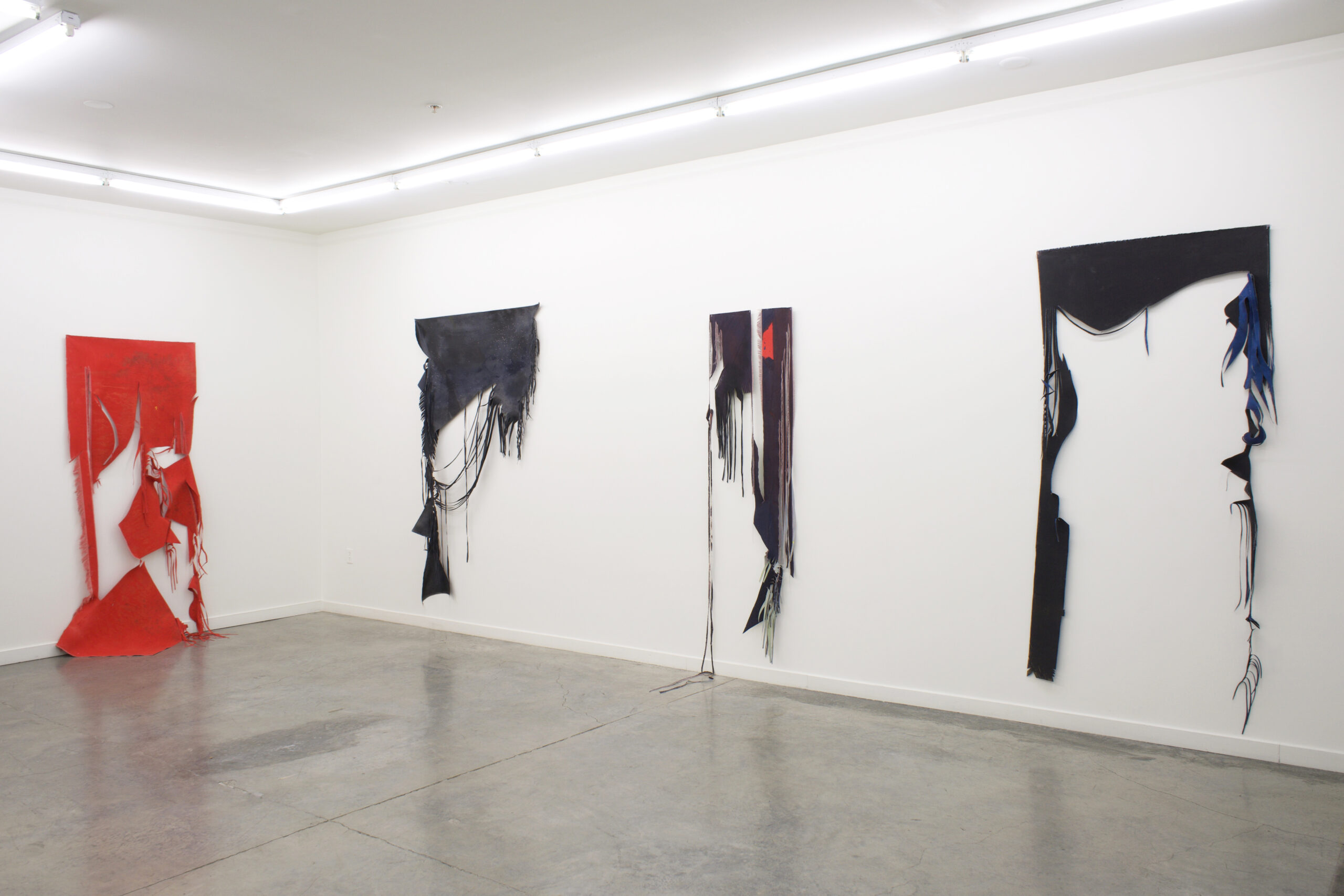
Installation view, Vaughn Terrell Davis
Jr.: Black Orchids, Romer Young Gallery, San Francisco, 2025. Photo courtesy Romer Young Gallery.
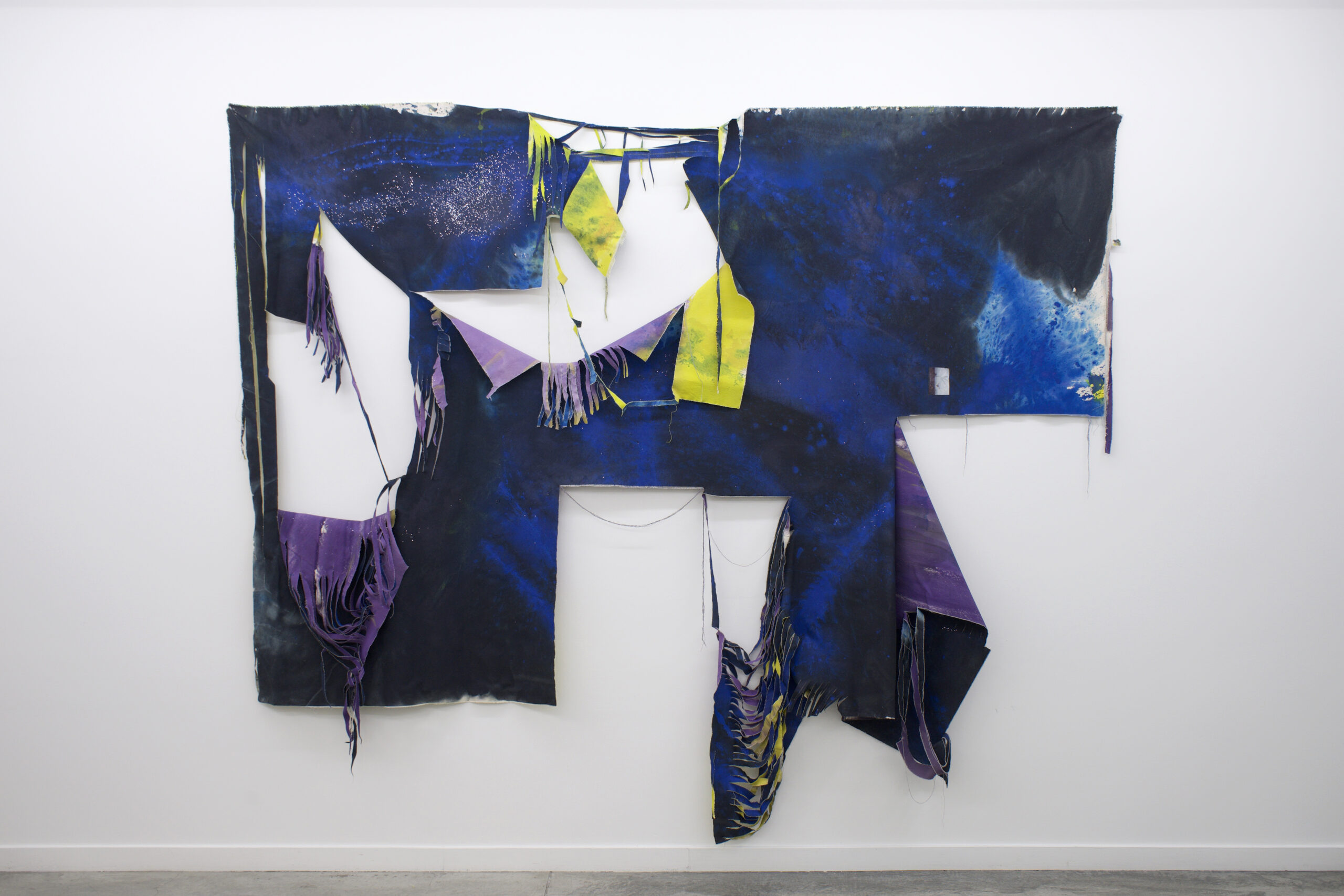
Vaughn Terrell Davis Jr. Our memories lost in the fugue, 2023. Acrylic, pigment, aerosol, dye, and photo transfer on canvas. Installation view of Vaughn Terrell Davis
Jr.: Black Orchids, Romer Young Gallery, San Francisco, 2025. Photo courtesy Romer Young Gallery.
Vaughn Terrell Davis Jr. pours richly pigmented acrylic paint onto raw canvas, soaking it with layer upon layer of vibrant, saturated color. To achieve intensity, he also paints with fabric dyes. On the floor in his studio, paint pools and colors bleed, suffusing the fabric with a sense of energy, gravity, and depth. Once these canvases dry, Davis returns to them, using blades to incise, shred, and unravel the fabric’s warp and weft. Holes, flaps, and fringes open up the painted surfaces, blurring the lines between creation and destruction before reaching resolution. Challenging painting’s traditional two-dimensionality, Davis’s paintings establish an architecture of their own: orchestrating configurations that drape and sag, soften the hard angles between walls and floors, and reach into the air. For this exhibition, Davis will present a selection of new and existing paintings, taking advantage of the double-height ceilings of CAM’s gallery space to surround viewers in color and dynamic movement.
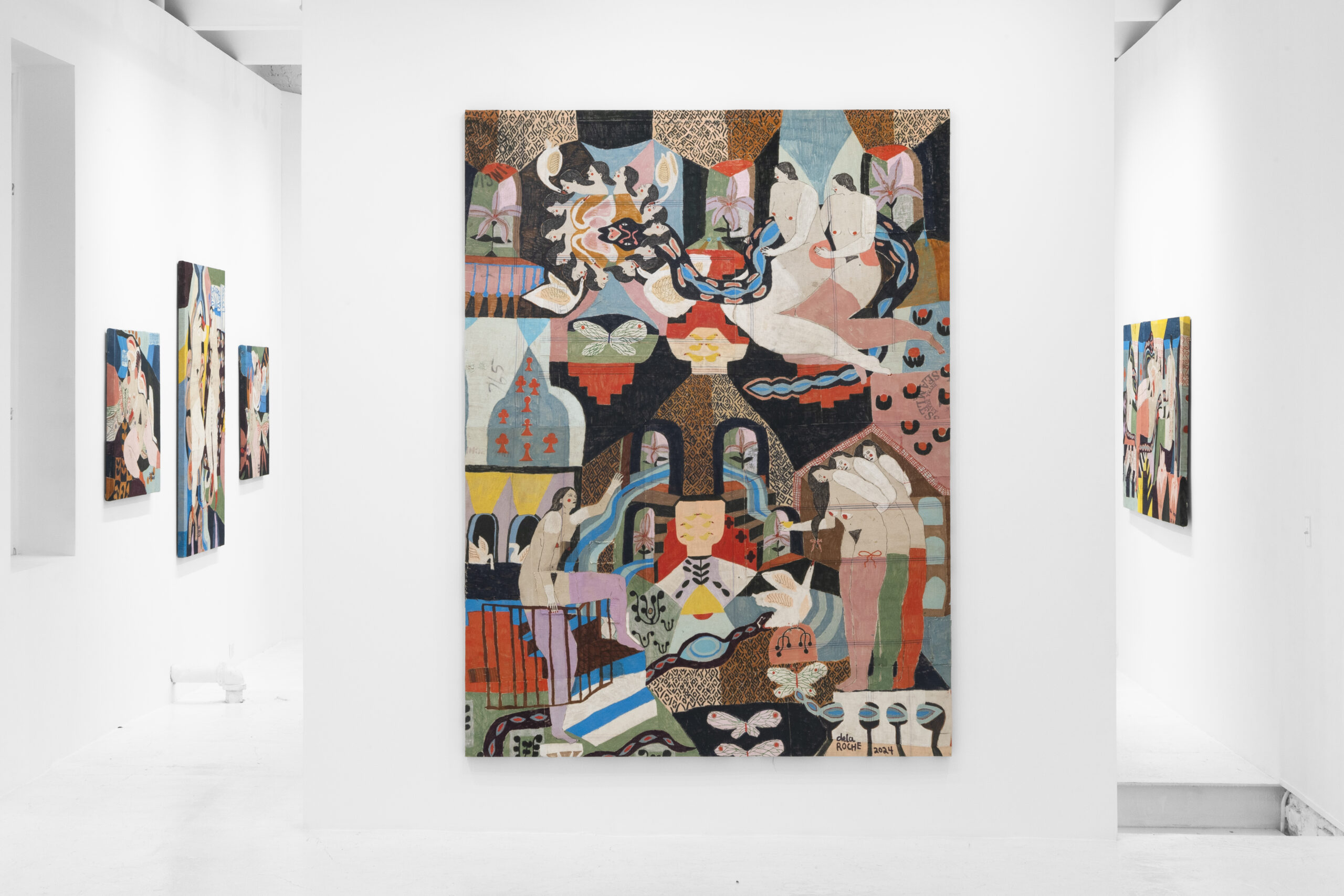
Lauren Dela Roche, Feminine Echoes of the Pastoral Underground, 2024. Acrylic on found cotton feed sack. Courtesy the artist. Photo courtesy Eric Firestone Gallery.
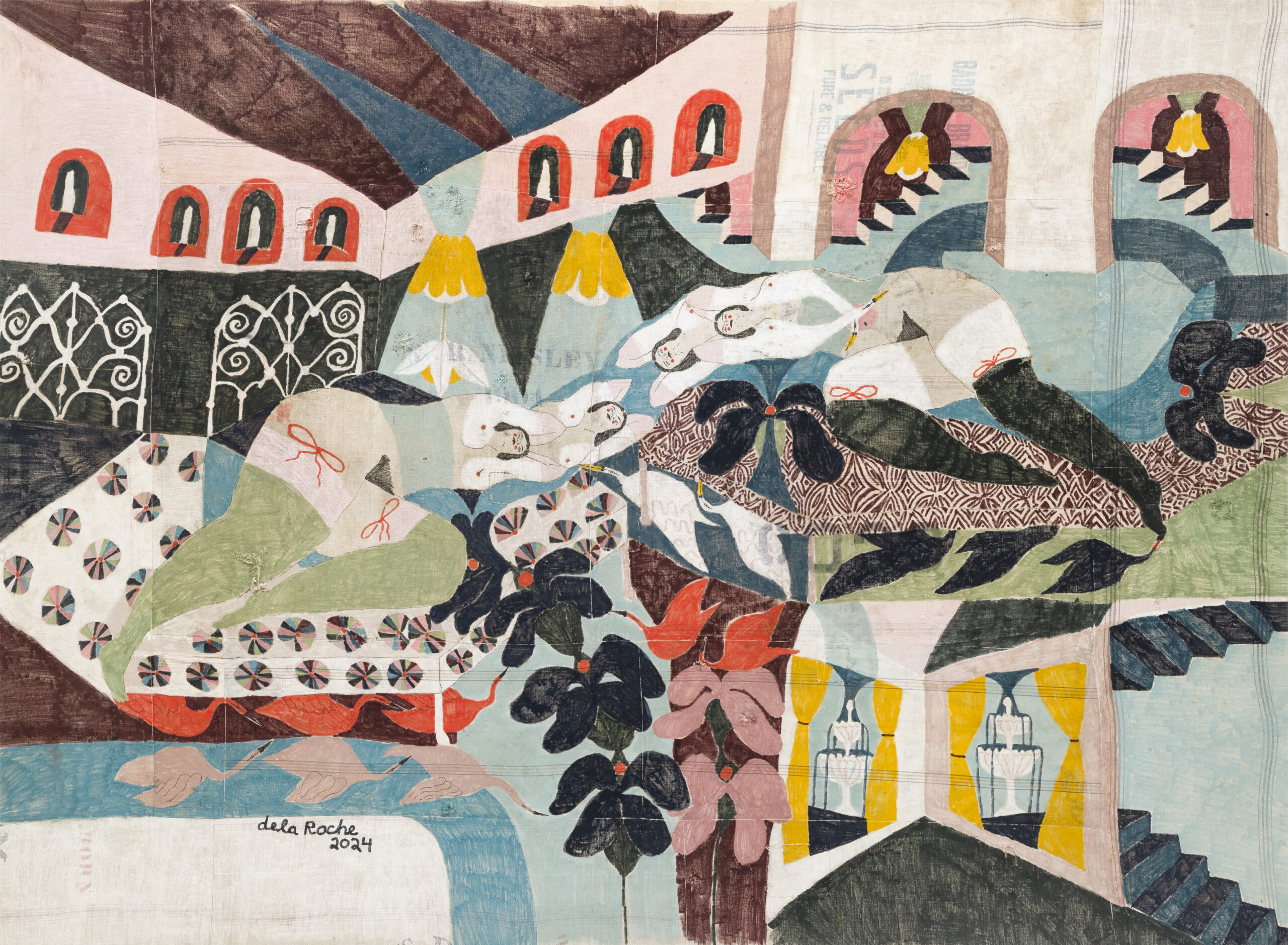
Lauren Dela Roche, Chain of Rocks, 2024. Acrylic on found cotton feed sack. Courtesy the artist. Photo courtesy Eric Firestone Gallery.
In many of Lauren dela Roche’s recent large-scale paintings, female figures lounge together in highly stylized architectural spaces animated by dynamic patterns and color. The vintage feed sacks she quilts together and paints on are full of patinas of use. Dela Roche incorporates these holes, logos, patches, and mends into her compositions, creating depth, and suggesting renewal. This exhibition sees dela Roche experimenting with new forms and mediums. In one new series, linear drawings of figures appear alongside cutout tissue paper shapes, pressed leaves and flowers, and treasured collage elements collected by the artist that she sandwiches between layers of encaustic wax; their rippling surfaces suggest layers of history accumulating or peeling away. Alongside these paintings, dela Roche debuts new figurative sculptures in cast bronze, presented alongside sculptures fabricated from vintage dollhouses.
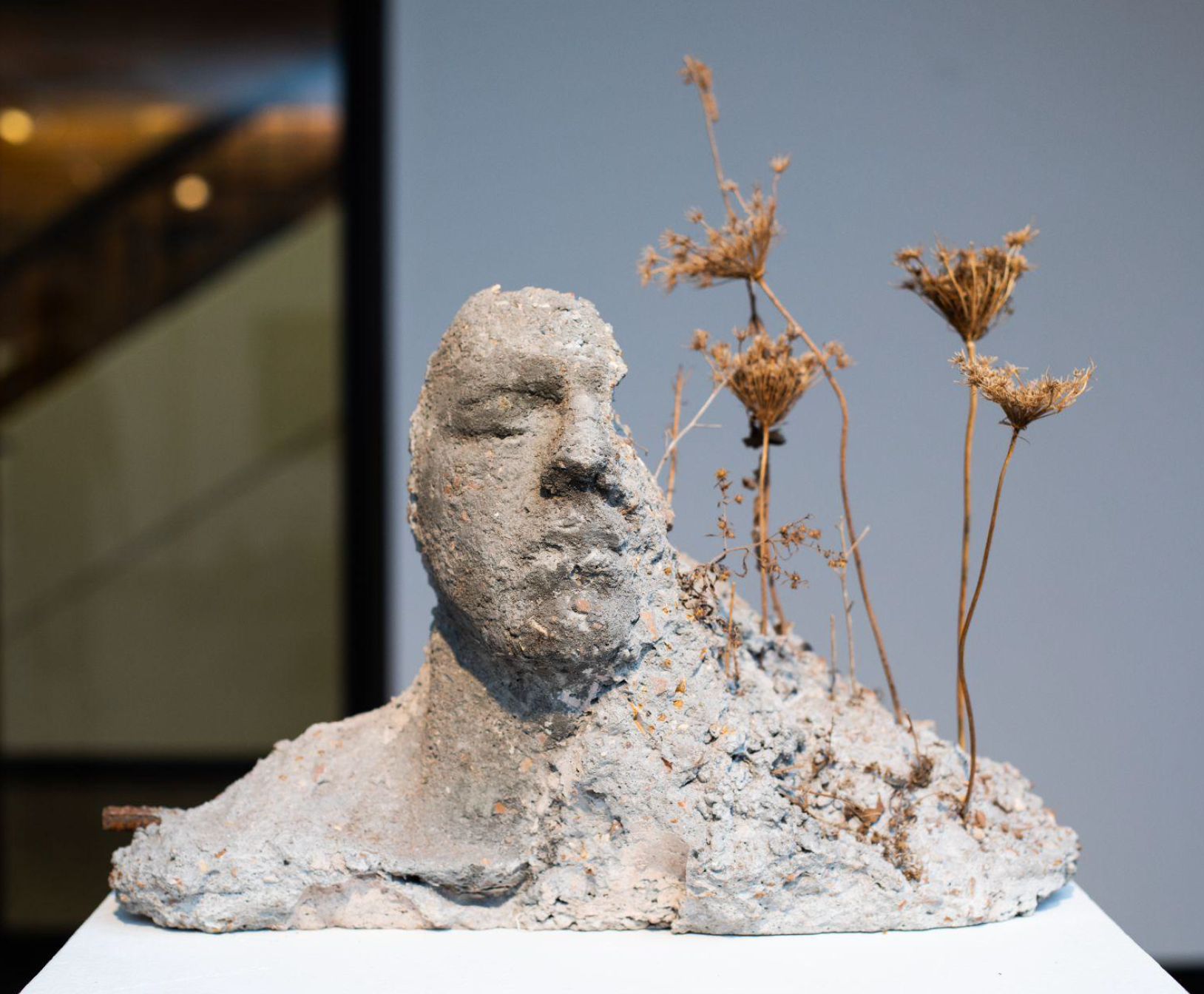
Vincent Stemmler, Stillness, 2018. Concrete, rebar, dried plant specimen, plastic bottle, butterfly. Installation view of Sticks in the Mud, Florissant Valley Contemporary Art Gallery, 2020. Photo: Chris Bauer.
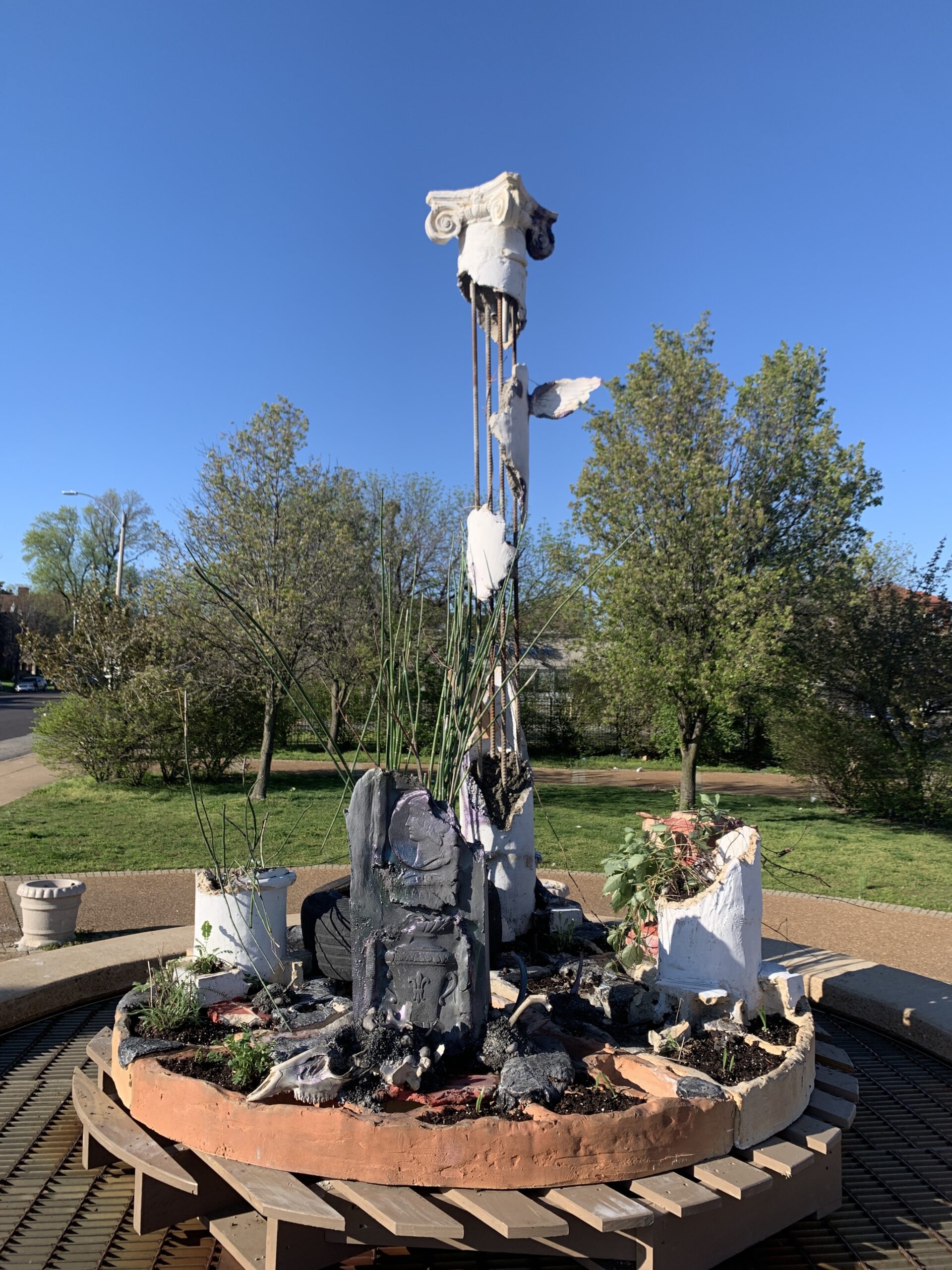
Vincent Stemmler, Three Columns, 2023. Ceramic, glaze, concrete, rebar, paint, deer bones, live native plants, found objects and architectural replications from the surrounding neighborhood of the work’s original installation. Installation view of Counterpublic, St. Louis, 2023. Courtesy the artist.
Vincent Stemmler uses common building materials like concrete and rebar to create sculptures within an installation that simultaneously suggests construction and ruin. Dried stalks of mullein—a plant that pops up where soil has been disturbed—populate an installation of multimedia works that the artist has imagined for this exhibition. Stemmler asked friends and community members to sit for life casting sessions, using the resulting molds to create figurative sculptures in cast concrete. His incorporation of digital animations into the sculptures offers a material counterpoint to weathered construction materials. By adapting a Victorian-era parlor trick called “Pepper’s Ghost,” Stemmler incorporates clear acrylic sheets and hidden video projections into these sculptures, with reflecting images appearing to hover in mid-air like ghosts or specters. Stemmler’s accompanying live video feed extends this narrative of regeneration by creating an infinite field of dried mullein stalks that signal growth and decay, drawing visitors into his imagined world.